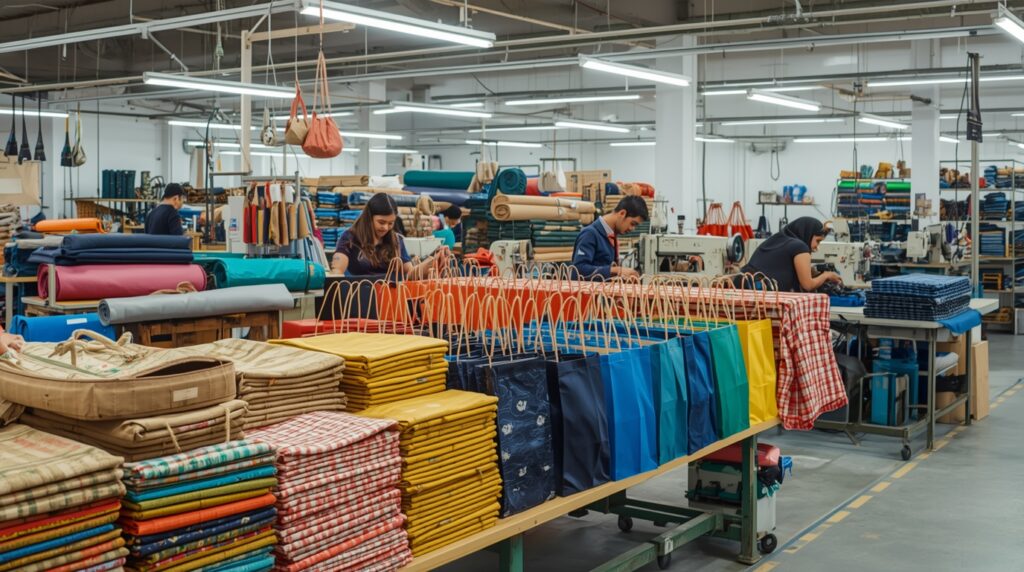

Bag Manufacturing: सफल बिज़नेस शुरू करने की पूरी गाइड
Intoduction– क्यों Bag Manufacturing?
अगर आप कोई ऐसा बिज़नेस ढूँढ रहे हैं जो कम पूंजी से शुरू हो, हमेशा डिमांड में रहे और समय के साथ स्केल भी हो सके, तो Bag Manufacturing सबसे सही विकल्पों में से एक है। आज हर सेक्टर—चाहे किराना स्टोर हो, फैशन ब्रांड हो या कॉर्पोरेट गिफ्टिंग—हर जगह बैग्स की ज़रूरत है। खासकर प्लास्टिक पर बैन और लोगों की eco-friendly सोच ने इस इंडस्ट्री को और भी तेज़ी से बढ़ा दिया है।
एक छोटा उदाहरण लीजिए—भारत में 2024 तक non-woven और cotton bags की मार्केट ग्रोथ रेट 12% CAGR रही। इसका मतलब है कि यह मार्केट लगातार तेज़ी से बढ़ रही है और 2025 में इसमें entry करना आपके लिए golden opportunity हो सकता है।
1. किस तरह के बैग बन सकते हैं?
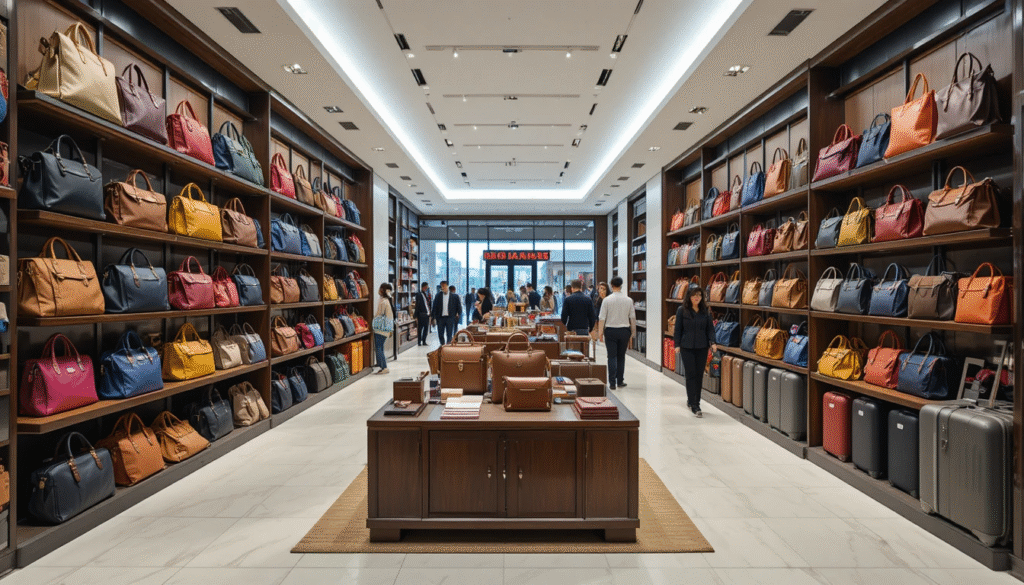
Bag Manufacturing की खासियत यह है कि आप एक ही लाइन से अलग-अलग प्रोडक्ट बना सकते हैं।
- Cotton Tote Bags – यह fashion और daily-use दोनों के लिए सबसे ज़्यादा डिमांड में हैं।
- Jute Bags – grocery और gifting में eco-friendly विकल्प।
- Non-woven Bags – सस्ते और promotional use में सबसे common।
- Paper Bags – बेकरी, रेस्टोरेंट और रिटेल के लिए।
- PP Woven / Laminated Bags – चावल, चीनी और bulk पैकिंग के लिए।
- Premium Bags (Canvas, Leather, PVC) – high-margin segment लेकिन high investment भी चाहिए।
शुरुआती उद्यमियों को cotton, jute और non-woven bags पर फोकस करना चाहिए क्योंकि demand भी ज्यादा है और entry cost भी manageable।
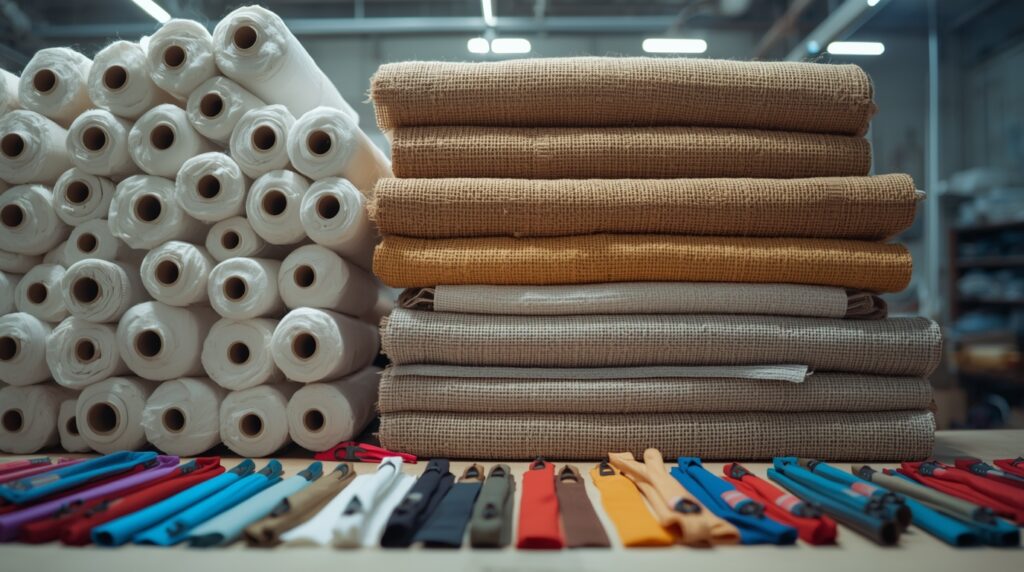
2. कच्चा माल – कहाँ से मिलेगा और कितना खर्च होगा?
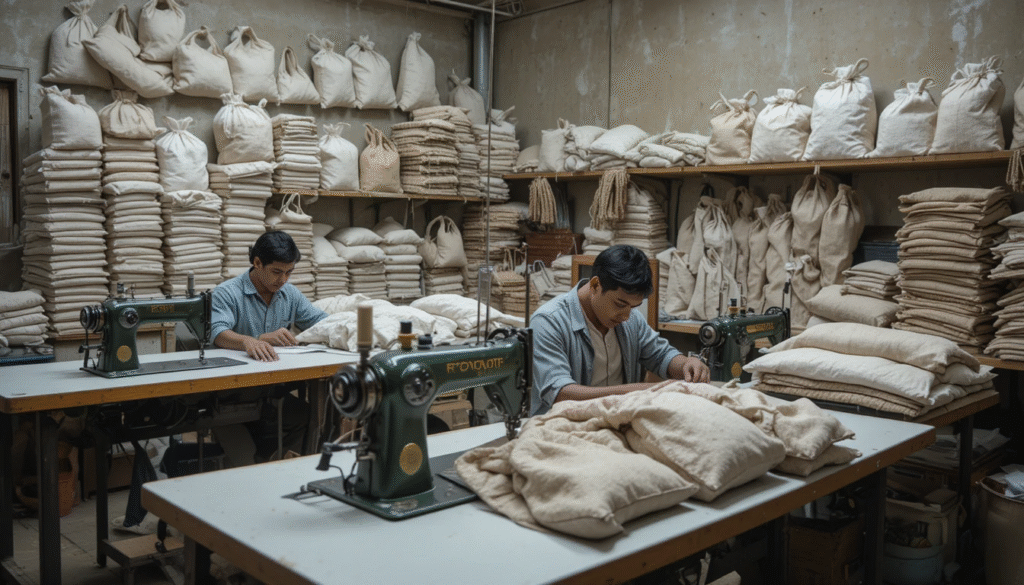
Bag Manufacturing में material cost ही आपकी pricing और margin तय करती है।
- Non-woven: polypropylene spunbond fabric (25–120 GSM)
- Cotton/Canvas: cotton fabric (100–350 GSM), cotton webbing for handles
- Jute: jute fabric/yard, jute twine for handles
- PP woven: woven polypropylene fabric, laminated film for water resistance
- Paper: kraft paper sheets, paper rope/cord handles
- Cotton / Canvas Fabric: 100–350 GSM का कपड़ा, प्राइस ₹160–₹250 प्रति मीटर।
- Jute Fabric: ₹60–₹120 प्रति मीटर।
- Non-woven Fabric: ₹90–₹140 प्रति किलो (rolls में मिलता है)।
- Paper (Kraft): ₹50–₹80 प्रति किलो।
Delhi के गांधी नगर मार्केट, Tirupur (Tamil Nadu) और Surat जैसे textile hubs से bulk में raw material आसानी से मिल जाता है।
3. मशीनरी – छोटे से बड़े स्तर तक
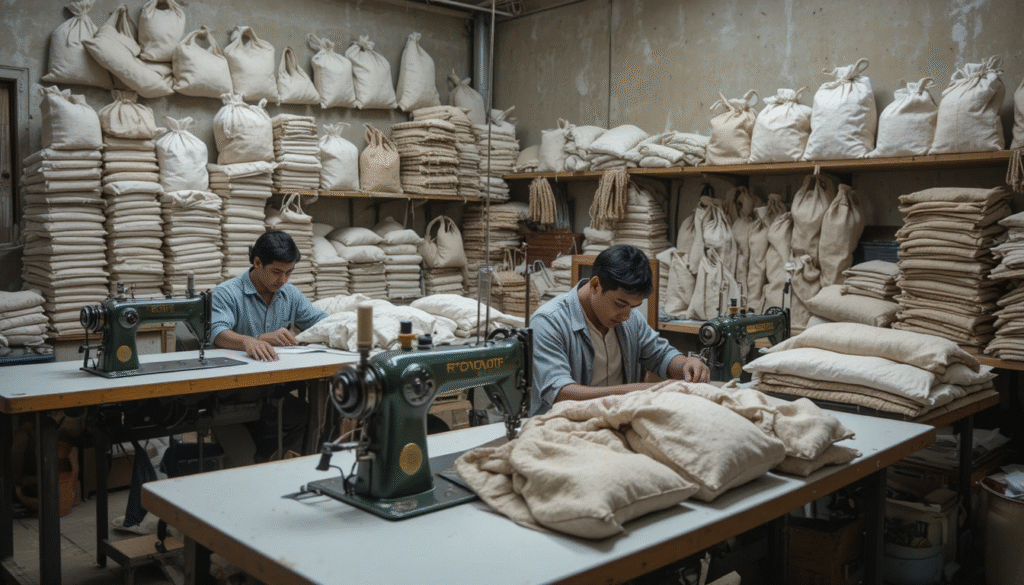
Small Batch Production — Practical Setup & Capacity
- Home setup (1–2 operators): 1 heavy-duty sewing machine + 1 overlocker + hand press → capacity ≈ 30–120 bags/day (size & complexity पर निर्भर)
- Small commercial (3–5 operators, semi-auto): 2–4 sewing machines + handle attaching machine → capacity ≈ 300–800 bags/day
- Automated plant: multi-line setup → capacity 2,000+ bags/day
- Heavy-duty सिलाई मशीन: ₹8,000–₹20,000
- Overlock मशीन: ₹15,000–₹25,000
- Cutting tools + Press machine: ₹10,000–₹20,000
मध्यम स्तर (Semi-Automatic):
- Ultrasonic sealing machine (non-woven के लिए): ₹1–₹2 लाख
- Semi-auto bag making machine: ₹2–₹5 लाख
- Screen printing unit: ₹50,000–₹2 लाख
बड़े स्तर (Fully Automated):
- Automatic bag making line: ₹10–₹20 लाख तक
- High-speed digital fabric printing machines (optional, premium line के लिए)
शुरूआत में ₹50,000 से ₹3 लाख तक का सेटअप आसानी से बन सकता है।
4. निर्माण प्रक्रिया – Step by Step
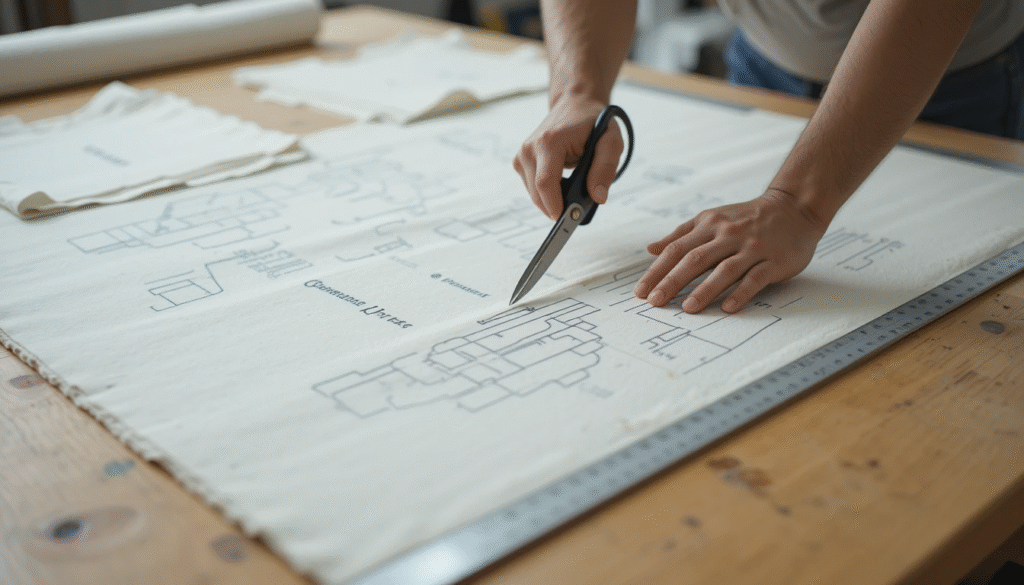
चलो एक example लेते हैं Cotton Tote Bag का:
- Design Finalize करें – आकार, हैंडल लंबाई और ब्रांड लोगो कहाँ होगा यह तय करें।
- Fabric Cutting – पैटर्न के हिसाब से कपड़े को काटें।
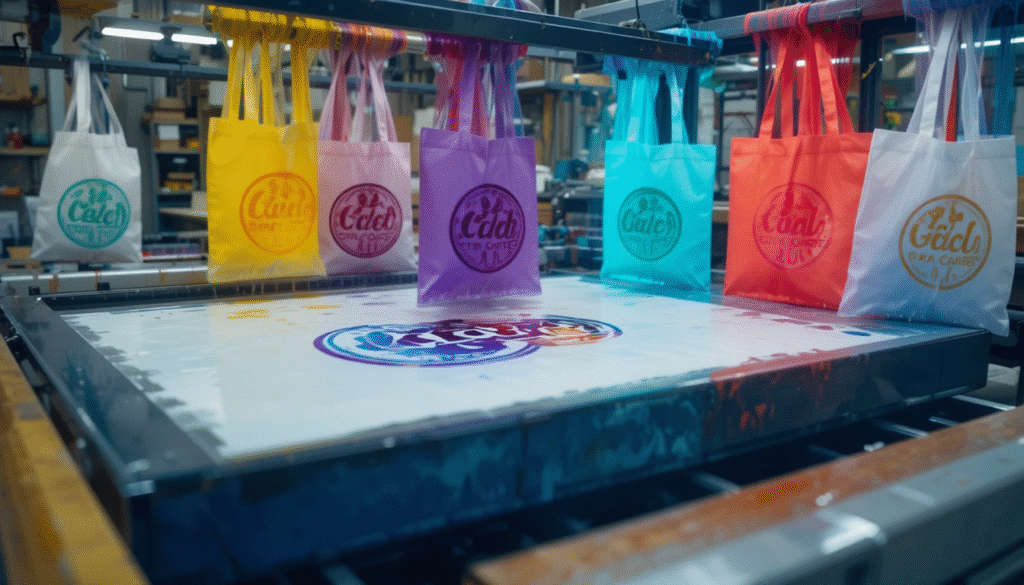
- Printing / Branding – Screen print या heat press से लोगो लगाएँ।
- Stitching – बॉडी को सिलें, बॉटम और हैंडल जोड़ें।
- Quality Check – seams मजबूत हैं या नहीं, हैंडल 10–15 किलो वज़न झेल सकता है या नहीं।
- Finishing & Packing – extra threads हटाएँ, pressing करें और polybag में पैक करें।
5. लागत और मुनाफा – एक असली गणना
Cost & Profit — वास्तविक उदाहरण (digit-by-digit गणना)
नीचे मैं एक cotton tote bag (simple, no lining) का realistic cost example दे रहा हूँ — step-by-step गणना के साथ। ये मान्यताएँ अपनाई जा रही हैं: 100% cotton canvas, इस्तेमाल ≈ 0.5 meter fabric, fabric price ₹200/meter (assumption), अन्य सामग्री और खर्चों के अनुमान दिए हैं।
Assumptions (मान):
- Fabric price = ₹200 per meter.
- Fabric usage per bag = 0.5 meter.
- Other materials (thread, label, handle material) = ₹20 per bag.
- Labour (stitching & finishing) = ₹20 per bag.
- Overhead (electricity, rent, maintenance) = ₹10 per bag.
- Packaging (polybag + label) = ₹8 per bag.
- Selling price (retail) = ₹399 per bag.
- Marketplace commission = 15% of selling price (if बेचते हैं online marketplace पर).
Step-by-step calculation:
- Fabric cost per bag = ₹200 × 0.5 = ₹100.
- Other materials = ₹20.
- Labour = ₹20.
- Overhead = ₹10.
- Packaging = ₹8.
- Total cost per bag = 100 + 20 + 20 + 10 + 8 = ₹158.
- Selling price = ₹399.
- Marketplace fee (15%) = 399 × 0.15 = ₹59.85 ≈ ₹59.85.
- Gross profit per bag = Selling price − Total cost = 399 − 158 = ₹241.
- Net profit after marketplace fee = 399 − 158 − 59.85 = ₹181.15.
Margins:
- Gross margin = (241 ÷ 399) × 100 = 60.40% (लगभग).
- Net margin (after marketplace fees) = (181.15 ÷ 399) × 100 = 45.40% (लगभग).
नोट: ये numbers उदाहरण हैं — fabric price, labour और selling price आपके area/model के अनुसार बदलेंगे। लेकिन तरीका एकदम यही होगा — छोटे बदलाव margin पर बड़ा असर डालते हैं। (मैंने हर arithmetic step ऊपर digit-by-digit दिखाया है ताकि गणना स्पष्ट रहे।)
6. लाइसेंस और रजिस्ट्रेशन
- GST नंबर – B2B और online बिक्री के लिए ज़रूरी।
- MSME रजिस्ट्रेशन – loan और subsidy में मदद।
- Trade License – local authority से।
- Import Export Code (IEC) – अगर आप export करना चाहते हैं।
7. मार्केटिंग और बिक्री चैनल
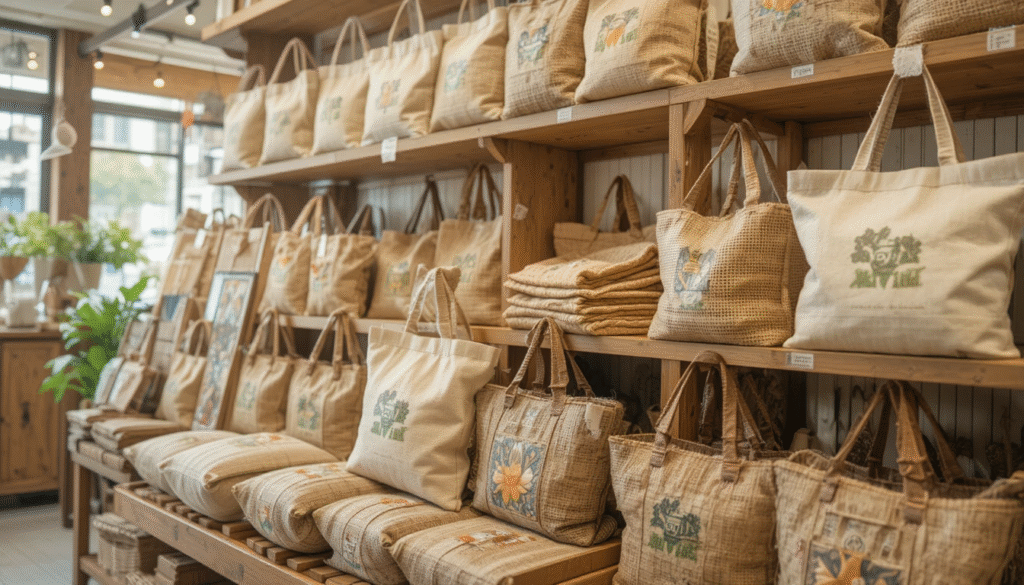
- B2B: local दुकानदार, सुपरमार्केट, corporates।
- D2C: खुद की वेबसाइट (Shopify), Instagram और WhatsApp orders।
- Marketplaces: Amazon, Flipkart, Meesho।
- Exhibitions: trade fairs और eco-product events।
आजकल Instagram reels और WhatsApp catalog छोटे manufacturers के लिए सबसे तेज़ और आसान तरीका है ग्राहकों तक पहुँचने का।
Risks & Mitigation
Machinery breakdown: maintenance contract, spare parts stock.
Raw material price volatility: multiple suppliers, forward purchase for best prices.
Quality issues: strict QC SOPs, sample approvals.
Competition: niche down (eco/handmade/custom).
8. सफलता की असली चाबियाँ
- Quality से कोई compromise न करें।
- Eco-friendly angle को अपनी marketing में ज़रूर highlight करें।
- Customized bags (logo, events, wedding favors) – सबसे high margin वाली category।
- Customer feedback लेकर product improve करते रहें।
Scaling Roadmap (0–36 months)
- 0–3 months: Product development, 3–5 SKUs, local sampling, social media presence.
- 3–12 months: Setup small workshop, partner with 2–3 retailers, list on marketplaces.
- 12–24 months: Semi-automate production, B2B sales (corporates/shops), export trials.
- 24–36 months: Full automation, own brand stores/wholesale distribution, private label for other brands.
निष्कर्ष
Bag Manufacturing कोई सिर्फ कपड़े काटकर और सिलकर करने वाला बिज़नेस नहीं है—यह एक ऐसा sector है जहाँ innovation, branding और eco-friendly approach से आप जल्दी establish हो सकते हैं। अगर आप step-by-step सही planning से आगे बढ़ते हैं, तो यह बिज़नेस 2025 में आपके लिए sustainable income और growth दोनों का source बन सकता है।


Pingback: Small Scale Mushroom Farming: Earning ₹50,000+ Monthly