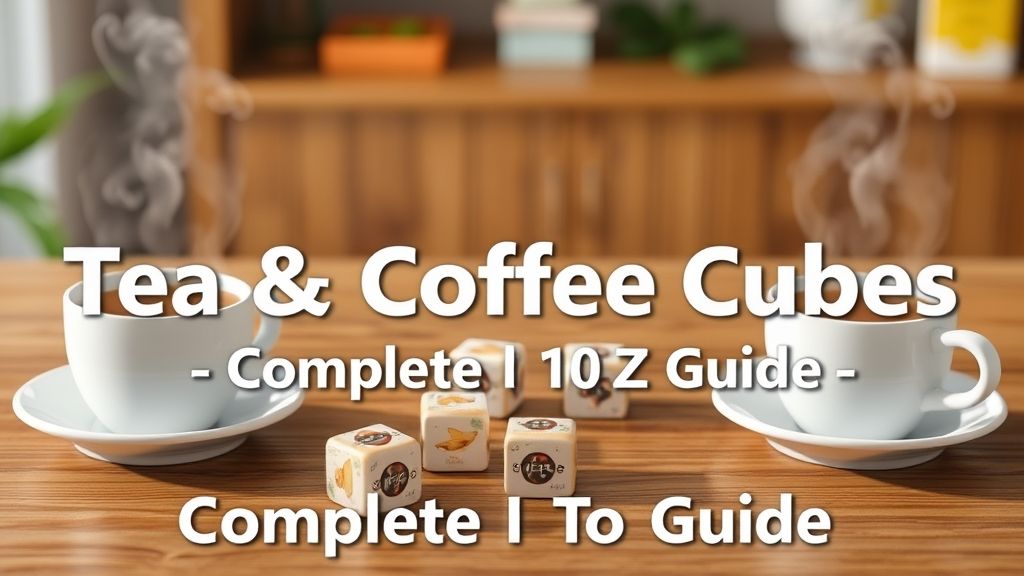

आज के तेज़जीवित जीवन में “सुगमता” (convenience) का बड़ा महत्व है। Tea/Coffee Cubes ऐसे छोटे solid cubes होते हैं — जिनमें instant tea/coffee, फ्लेवर और कभी-कभी दूध/चीनी का प्री-मिक्स होता है। इन्हें कप में डालो, गरम पानी डालो, घोमाओ — तुरंत पेय तैयार।
क्यों यह आइडिया अच्छा है?
- यात्रा, ऑफिस, हॉस्टल, और on-the-go लाइफस्टाइल के लिए परफेक्ट।
- पैकेजिंग छोटा, शेल्फ-लाइफ लंबी, और परिश्रम कम।
- India में अब तक बड़े स्तर पर लोकल ब्रांड कम हैं — first-mover advantage संभव है।
1) मार्केट समझें (Who, Why, How much)
- टार्गेट ऑडियंस: ऑफिस-पेशेवर, कॉलेज-स्टूडेंट, ट्रैवलर्स, छोटे कैफे, ई-commerce shoppers।
- उपयोग का मोमेंट: सुबह का टाइम, ब्रेक टाइम, ट्रैवल उपयोग।
- प्राइस-टियर: mass affordable से लेकर premium gourmet तक।
- रिवेन्यू मॉडल: single-pack retail, subscription (monthly 30 cubes), B2B (hotels, hostels), corporate gifting.
2) प्रोडक्ट वेराइटी और फॉर्मूलेशन (What to make)
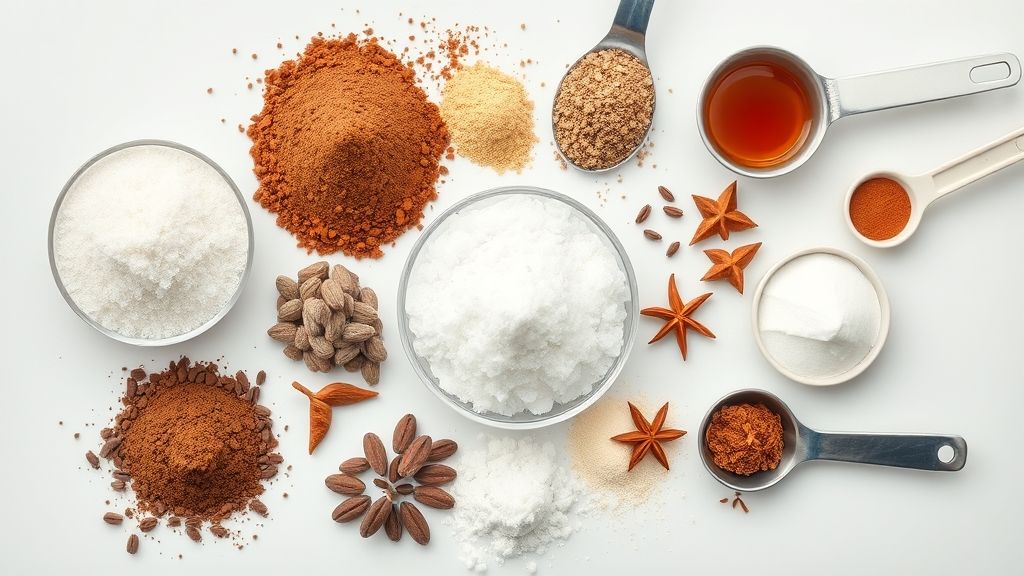
Coffee Cubes: instant coffee powder (spray-dried/freeze-dried), powdered creamer या milk solids (optional), sugar/jaggery (optional), flavor (vanilla/hazelnut), binder (maltodextrin/glucose).
Tea Cubes: instant tea extract or concentrated spray-dried tea, masala spice powders (for masala chai), sweetener (optional), binder (gum arabic / glucose).
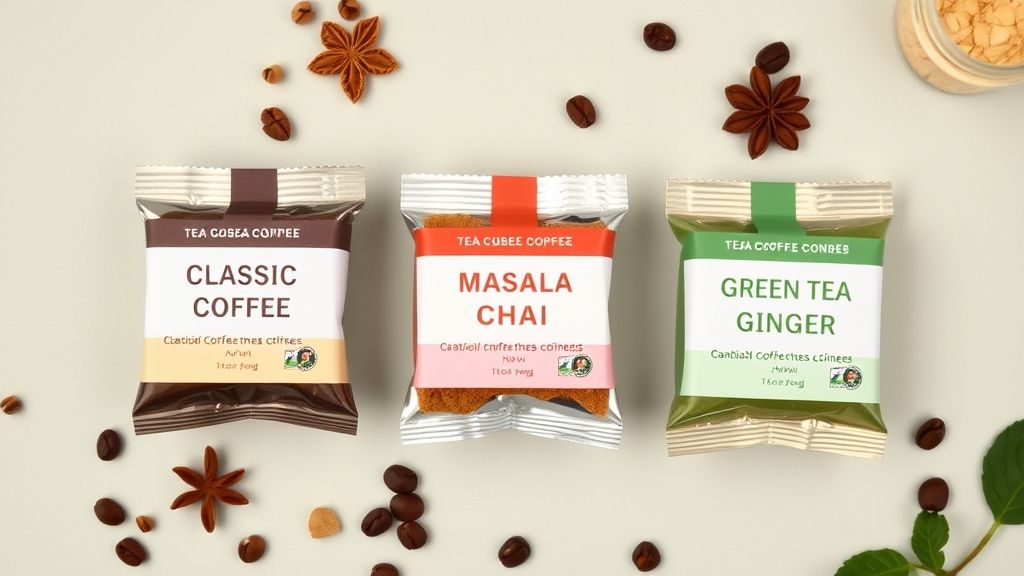
Variants: Plain black coffee, Latte cube (milk solids included), Masala chai cube, Green tea ginger, Cardamom tea, Sugar-free versions, Keto version (with non-caloric sweetener).
3) कच्चा माल (Raw materials) — details & tips
- Instant Coffee Powder (spray/freeze dried): quality और aroma पर ध्यान दें।
- Instant Tea Extract Powder: Assam/Darjeeling extract suppliers से।
- Binders: Glucose syrup, maltodextrin, gum arabic — cube को form और stability देता है।
- Milk Solids / Non-Dairy Creamer: shelf stability के हिसाब से चुनें।
- Flavors & Stabilizers: natural flavors preferred for premium product.
- Anti-caking agents (अगर जरूरत हो)।
स्रोत: India में instant coffee/tea suppliers मौजूद हैं; small batches के लिए local distributors से शुरुआत करें और बाद में bulk import cheaper हो सकता है।
4) मेकिंग प्रोसेस — step-by-step (Small batch friendly)
- Formulation & R&D
- छोटा trial batch बनाइए (1–5 kg) — ratio, sweetness, mouthfeel और solubility पर टेस्ट करें।
- टेस्ट: 1 cube को 150–200 ml गरम पानी में घोल कर sensory test करें।
- Mixing
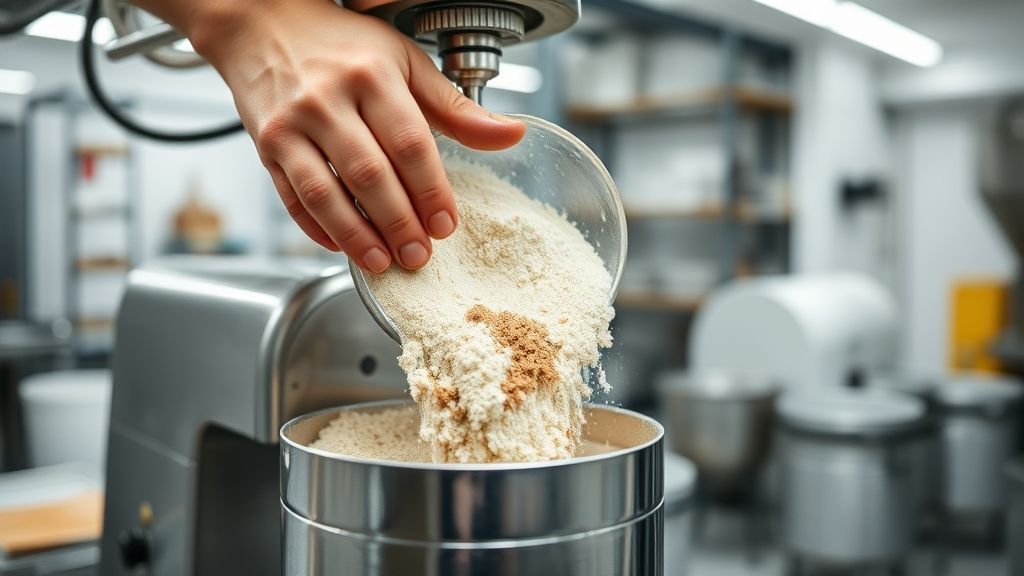
- Dry powders (coffee/tea + creamer + sugar + spice) को homogeneous मिश्रण बनाइए।
- Binder (glucose syrup) को controllably मिलाइए ताकि मिश्रण हल्का-सा चिपचिपा हो, पर गीला न हो।
- Moulding / Tablet Pressing
- मिश्रण को cube mould या tablet press में डालकर shape दी जाती है।
- Small scale: manual/hand moulds या semi-auto tablet press (कम MOQ पर)।
- Drying / Stabilizing
- Moulded cubes को tray dryer या dehumidified room में dry कीजिए जब तक वे hard और non-sticky न हो जाएँ।
- Quality Check
- Solubility test, texture test, moisture content test (target moisture < 5% ideally), taste consistency।
- Individual Wrapping
- हर cube को foil/biodegradable film में wrap करें (hygiene और shelf-life के लिए)।
- Packing into Retail Packs
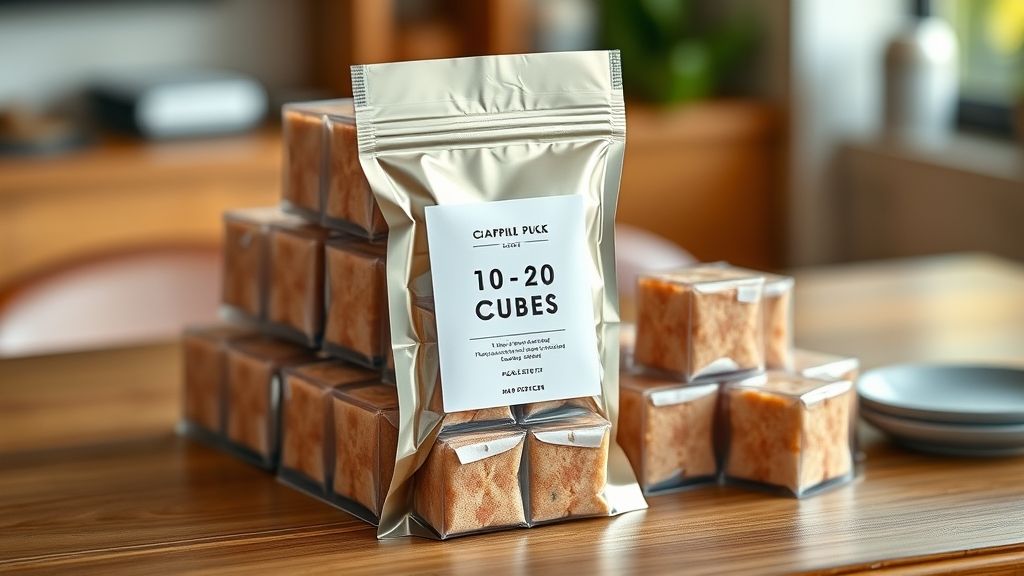
- 10/20/30 cubes per pouch/box. Add desiccant if needed.
5) आवश्यक मशीनरी (Small Batch to Medium Scale)
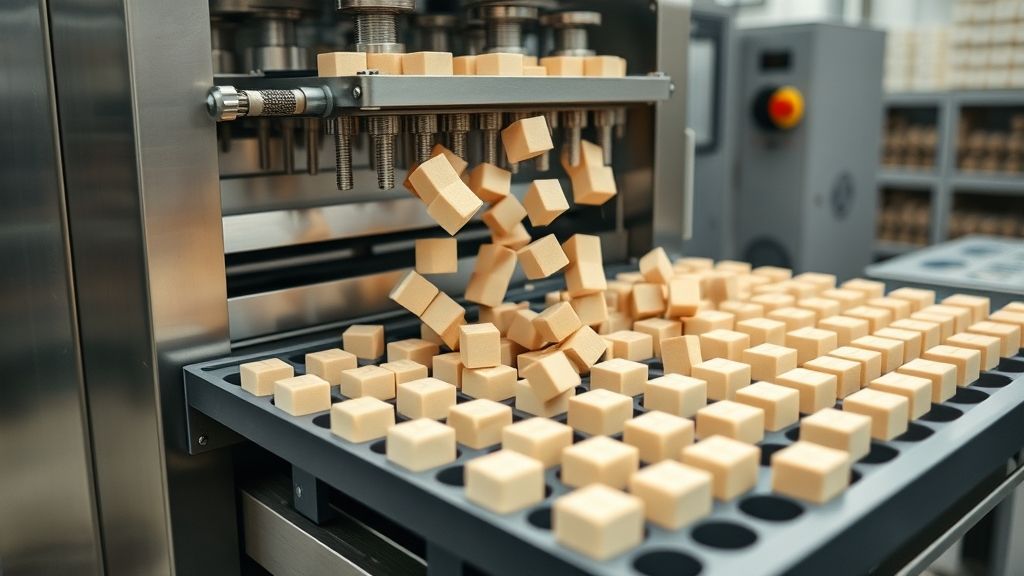
मैंने practical छोटे-scale setup पर ध्यान रखा — अगर आप घर-level से शुरू करें या micro-factory।
Small batch (starter) machinery
- Ribbon / Planetary Mixer (10–30 kg batch): ₹40,000 – ₹70,000.
- Semi-auto Tablet Press / Cube Press Machine (small output): ₹1,50,000 – ₹2,50,000.
- Tray Dryer / Dehydrator (small): ₹80,000 – ₹1,50,000.
- Manual or Semi-auto Wrap/Sealing Machine (for individual cube wrapping): ₹25,000 – ₹60,000.
- Pouch Sealer / Packaging Machine (for retail pouches): ₹40,000 – ₹1,00,000.
Medium scale / Automated (if scaling later)
- Automated powder blending & dosing systems, continuous tablet press, automated individual wrapping lines. (Costs rise sharply → ₹10 lakh+ depending on automation.)
नोट: कीमतें टेक्निकल स्पेसिफिकेशन, ब्रांड और new/used पर बदलती हैं। शुरुआत में semi-auto setup सबसे practical है।
6) स्टार्टअप निवेश (Estimated Small Batch Setup)
- Machinery (starter set): approx ₹3.5 lakh – ₹5 lakh.
- Initial raw material (first batch): ₹50,000 – ₹1 lakh.
- Packaging & branding (initial): ₹30,000 – ₹70,000.
- Licensing, lab tests, trademark, minor fittings: ₹30,000 – ₹80,000.
Total initial investment (approx small scale): ₹4.5 lakh – ₹7 lakh.
(आप third-party manufacturer के साथ private label करके मशीनरी का खर्च बचा सकते हैं — तब initial investment काफी कम होता है: ₹50k–₹1.5L mainly for branding + sample development.)
7) लागत गणना और प्रॉफिट मार्जिन — एक उदाहरण (step-by-step)
मैं एक सपष्ट उदाहरण दे रहा हूँ ताकि आप गणित समझकर निर्णय लें।
मान लेते हैं: एक cube की कुल यूनिट-कास्ट = ₹5 (यह realistic mid value है)।
- यदि आप 10 cubes का पैक बनाएँ: raw cost = 10 × 5 = 50. (गणना: 5+5+5+5+5+5+5+5+5+5 = 50)
- मान लीजिए पैकेजिंग (pouch, label, boxing, desiccant) = ₹20 प्रति pack।
- तो कुल लागत per 10-cube pack = ₹50 + ₹20 = ₹70.
अब आप pack को ऑनलाइन ₹249 पर बेचते हैं।
- Revenue per pack = ₹249.
- Profit per pack = ₹249 − ₹70 = ₹179. (गणना: 249 − 70 = 179)
- Profit margin % = (179 / 249) × 100.
अब भाग और प्रतिशत निकालेँ: 179 ÷ 249 ≈ 0.71887 → यानी ≈ 71.9% margin.
यह एक उदाहरण है — real world में discounts, marketplace fees (Amazon commission ~10–15% + shipping), returns और ad costs जुड़ेंगे। पर फिर भी margin attractive रहेगा। यदि marketplace fees जोड़ें (मान लें 20% of selling price), तो:
- Fees = 20% of 249 = 49.8 ≈ ₹50.
- Revised profit = 179 − 50 = ₹129 → Revised margin = 129/249 ≈ 51.8%.
यह भी अच्छी मार्जिन है।
8) रूटीन QA और shelf-life (Quality Control)
- Moisture control: moisture कम रखें (<5%) — नहीं तो cubes नर्म/चिपचिपे होंगे।
- Solubility testing: cold vs hot water में dissolution behavior चेक करें।
- Microbial & Contaminant tests: especially अगर milk solids use कर रहे हों → FSSAI मानक के अनुरूप।
- Packaging: individually wrapped cubes से shelf life बढ़ती है और consumer convenience भी।
9) लाइसेंस और रेगुलेटरी (India specific)
- FSSAI License — food product होने के कारण mandatory (Basic/State/Central depending on scale).
- GST Registration — online sales और B2B के लिए जरूरी।
- Trademark — brand name और logo की सुरक्षा के लिए।
- Labelling Requirements — MRP, ingredients, manufacturing date, best before, FSSAI license number, net weight और nutritional info (यदि claim करते हैं)।
- यदि export करना चाहें → export documentation + HACCP/ISO certifications optional पर मददगार।
10) पैकेजिंग और ब्रांडिंग — practical tips
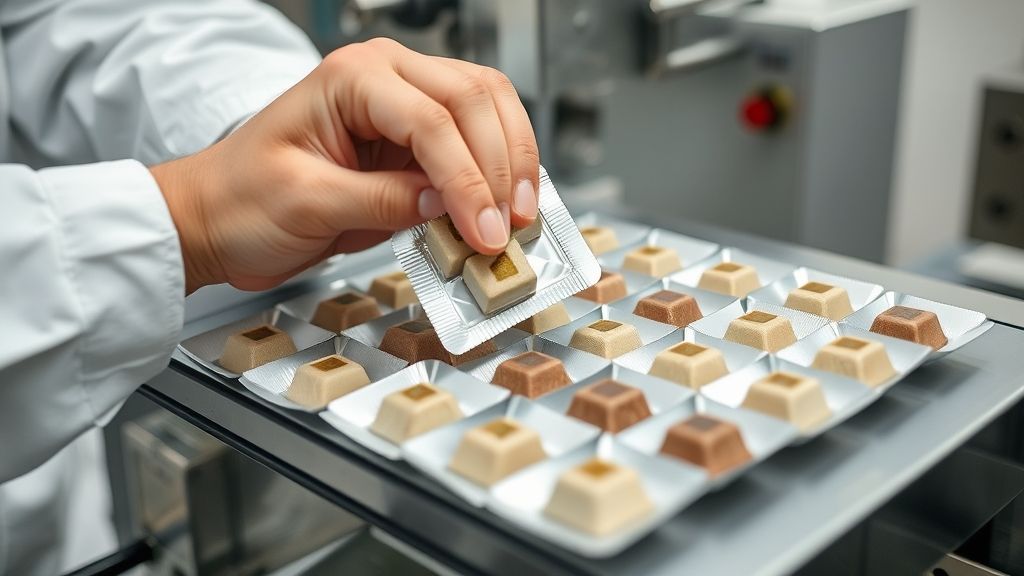
- Individual foil wrap (heat-sealed) for each cube → hygiene & travel friendly.
- Pouch design: resealable foil pouch for 10/20 cubes with tear notch. Include attractive visuals, brewing instructions, flavor icons.
- Premium segment: use small tin boxes or kraft boxes with inner wrapped cubes. Good for gifting.
- Sustainability: biodegradable inner wraps or recyclable cartons can be USP (customers pay premium).
11) मार्केटिंग और सेल चैनल्स
- Amazon / Flipkart / Meesho — launch with optimized listing, high-quality images, A+ content, and initial coupons.
- D2C (Shopify) — subscription model (monthly 30 cubes) increases LTV.
- Instagram / YouTube Reels / Shorts — product demos: “Drop cube in hot water” videos perform well.
- Corporate & B2B — offices, hotels, hostels, travel kits suppliers.
- Sampling & Local Cafés — collaborate with cafes to test product acceptance.
12) छोटे-बड़े पैमाने पर उत्पादन क्षमता (Example numbers)
- Small batch (semi-auto): 1 machine ~ can press 2,000–8,000 cubes/day depending on cycle rate and shifts.
- If each pack = 10 cubes, then daily packs = 200–800 packs/day.
- Scaling: add parallel tablet presses, automated wrappers to increase capacity linearly.
13) जोखिम (Risks) और उनसे निपटने की रणनीतियाँ
- Solubility complaints → optimize particle size, binder and drying process.
- Shelf life issues → better moisture control, oxygen barrier packaging.
- Competition from imports → Brand positioning (local flavors, masala chai variants) और faster delivery।
- Regulatory delays → पहले से FSSAI registration और lab testing schedule करें।
14) स्केलेरटी (Scale Up Roadmap — 0 to 3 years)
- Phase 1 (0–6 months): R&D, small batch trials, branding, Amazon launch, initial marketing. (Investment ₹4–7L)
- Phase 2 (6–18 months): Optimize supply chain, increased production, subscription launch, B2B partnerships. (Add machinery, investment +₹5–10L)
- Phase 3 (18–36 months): Automated production line, exports, retail distribution, private label for other brands. (Major CAPEX as per scale)
15) प्रैक्टिकल टिप्स (Expert Advice
- Start with 3-4 flavors — Classic Coffee, Latte, Masala Chai, Green Tea Ginger. Test-market them.
- Focus on packaging UX — resealable pouch, brewing instructions and QR for video demo.
- Quality first — taste consistency beats price. Repeat customers build brand.
- Offer sampling packs (3 cubes) to convert new customers.
- Leverage local flavors (elaichi, mulethi) as USP for India market.
निष्कर्ष — क्या यह बिज़नेस आपके लिए सही है?
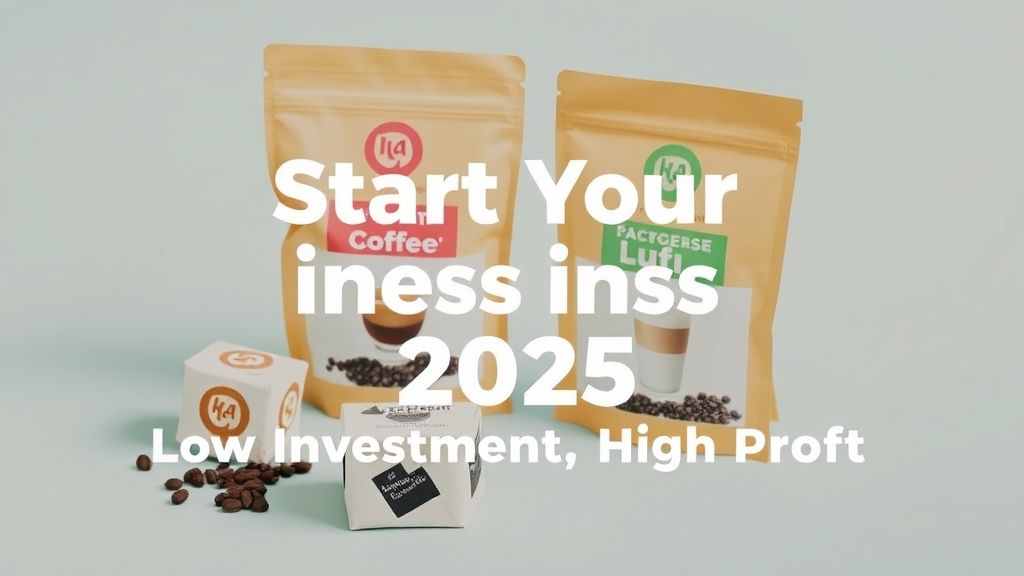
Tea/Coffee Cubes एक high-margin, low-inventory, scalable बिज़नेस मोडल है जो आज की मांग (convenience + travel + gifting) से पूरी तरह मेल खाता है। small batch से शुरू करके आप relatively कम निवेश में validate कर सकते हैं, और सही branding + distribution से 1–3 साल में अच्छी ग्रोथ हासिल कर सकते हैं।
✅ “और बिज़नेस आइडियाज़ चाहिए? अभी Subscribe करें और Success की पहली सीढ़ी चढ़ें!”
✅ “आप किस आइडिया के बारे में डिटेल जानना चाहते हैं? Comment में लिखें, मैं A to Z गाइड आपके साथ शेयर करूँगा।”
✅ “2025 का सबसे बेस्ट बिज़नेस आइडिया मिस न करें – अभी Follow/Subscribe करें!”
✅ “छोटे निवेश से बड़ा मुनाफ़ा कमाने का सपना अब होगा पूरा। Details के लिए हमें Subscribe कीजिए।”


Pingback: 2025 के टॉप 10 यूनिक बिज़नेस आइडिया | कम निवेश, हाई प्रॉफिट - Knock4u Business Idea